
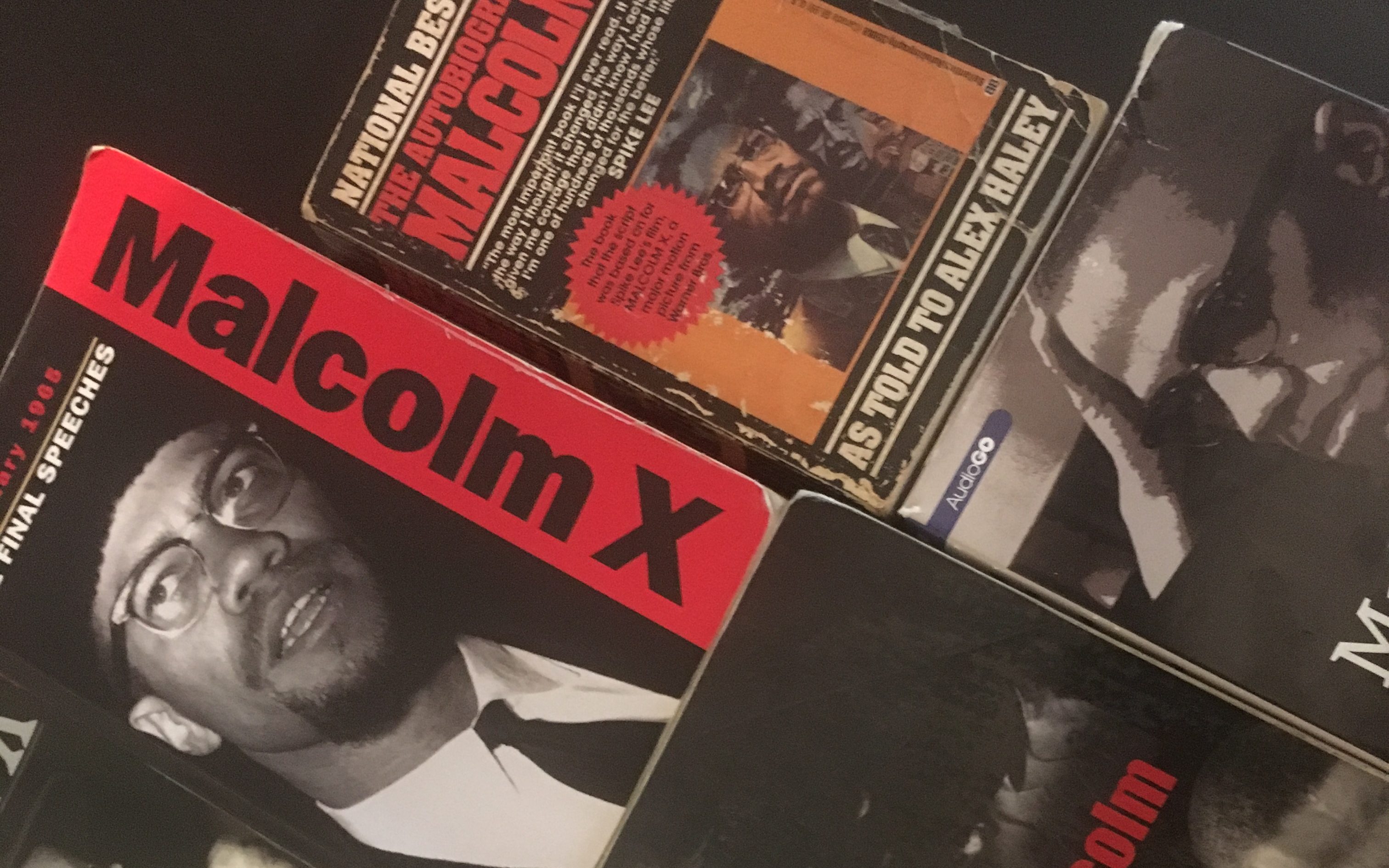
Malcolm Little was born on May 19th 1925 in Omaha, Nebraska. He was one of four children born to Louis Helen and Earl Little (Earl Little also had three children from a prior relationship who lived in Boston.) Malcolm X had many reasons to be angry at Euro-Americans. His father and four uncles were killed by Euro-Americans and his mother was put into a mental institution for 26 years, tearing Malcolm’s family apart and splitting him up from his sibblings. Eventually like many other poor urban youth from broken homes, Malcolm was pulled into the street life. On the streets of Boston and later New York he would make a name for himself as a hustler and a pimp and eventually landing in prison on a burglary conviction. Malcolm ended up serving seven years in prison, and it was while incarcerated that Malcolm discovered books (which he read vigorously) and Islam and both changed him forever.
Malcolm took on the surname “X” because he stated that “Little” was the slave name given to his ancestors, and since he did not know his real African name, then “X” would suit him better than his birth name “Little.”
Malcolm joined the Nation of Islam upon release from prison, and continued to be mentored by Elijah Muhammad whom he had already started writing and taking instruction from while incarcerated. With time Malcolm ended up becoming a national spokesman for the religious organization, and became quite a prolific speaker. His speeches varied in subject, e.g. he could speak about religion, or he could denounce “white supremacy” and educate Europeans and Euro-Americans about their true histories and about their unjust actions towards the global BIPOC community. Malcolm represented the Nation for several years until he eventually broke ties with the Nation and decided to start two organizations the Muslim Mosque Inc. and the Organization of Afro-American Unity (OAAU).
Malcolm made the Hajj (pilgrimage to Mecca) and met with many world leaders in Africa and the Middle East. Malcolm was always pushing for Pan Africanism and trying to shed light to the plight of African Americans in the so-called “Land of the Free.”
Ask Yourself
What does the legacy of Malcolm X mean for BIPOC people today? Do his words still inspire people of color, fighting everyday injustice and racism? What does the name Malcolm X mean to the kids lost in the streets, who think there is no way out for them? What does Malcolm X mean to the kids who are tired of white supremacy? What does he mean to BIPOC people that have felt humiliation or discrimination in their lives? What does Malcolm X mean to the kids who have seen their culture not covered by school curriculum or represented on television or in film? What does Malcolm mean to the kids that looked for role models, but saw them killed off one by one, or still captive behind prison walls like e.g. many former Black Panthers? What does his name mean to those like me who are sick of racism?
What He Still Means Today
Malcolm X was someone who seemed fearless when it came to telling the oppressor his truths. I personally had never heard anyone speak to white people the way he did. He would speak for those who couldn’t, who had no voice, and he was a hero to the oppressed of the world. His presence is needed now more than ever, in a world where white supremacists again feel emboldened to terrorize BIPOC people like they have done so continuously in the past.
I truly feel that if Malcolm X would not have been assasinated he would have continued to do a lot of good for humanity. I feel that he was that “fighting spirit” I feel he was that “Pride” he was a champion of the oppressed. He was our champion, he was a role model and that is why we will never forget him and will continue to study his speeches. Malcolm X is also a symbol that people can change; that if you only have faith in them and don’t give up on them, the most unexpected miracles can happen. Malcolm X is a hero that continues to influence and touch lives. He had the courage that we will all need to confront and defeat racism.
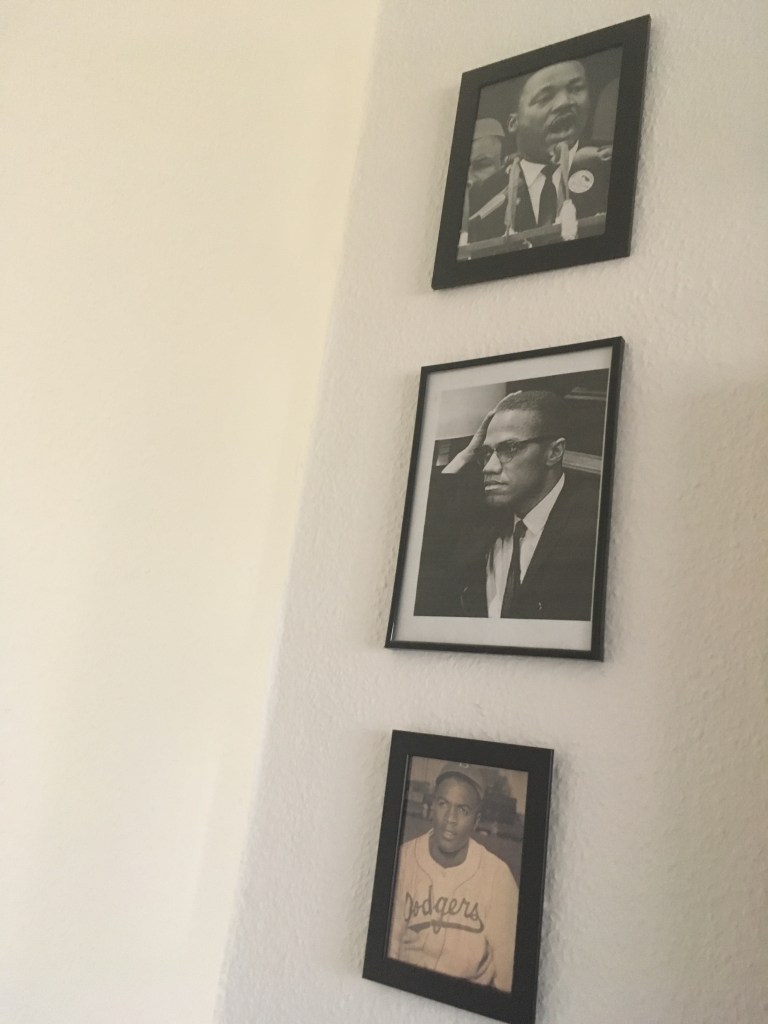
“Some personal heroes of mine.” (Photo by, Miguel Torres)
Sources:
X, Malcolm, et al. The Autobiography of Malcolm X: As Told to Alex Haley. Reissue, Ballantine Books, 1992.
“Malcolm x.” Www.Malcolmx.Com, http://www.malcolmx.com/biography. Accessed 18 May 2021.
“The Life of Malcolm X Documentary.” You Tube, uploaded by ILM FILM, 27 Dec. 2019, http://www.youtube.com/watch?v=rnX0tgNu4NA&t=241s.
 Fighting Racism Workshop
Leave a comment